
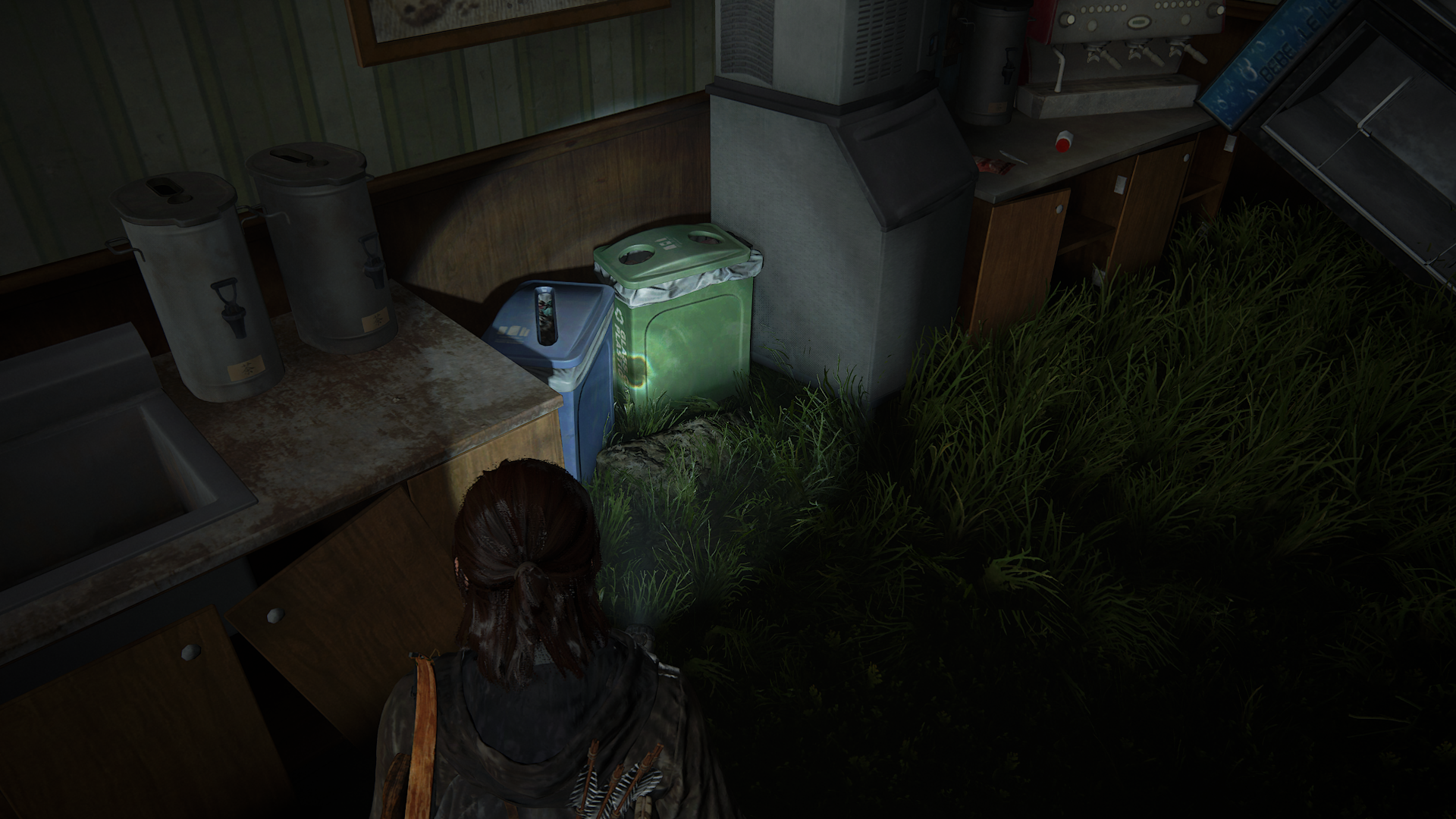
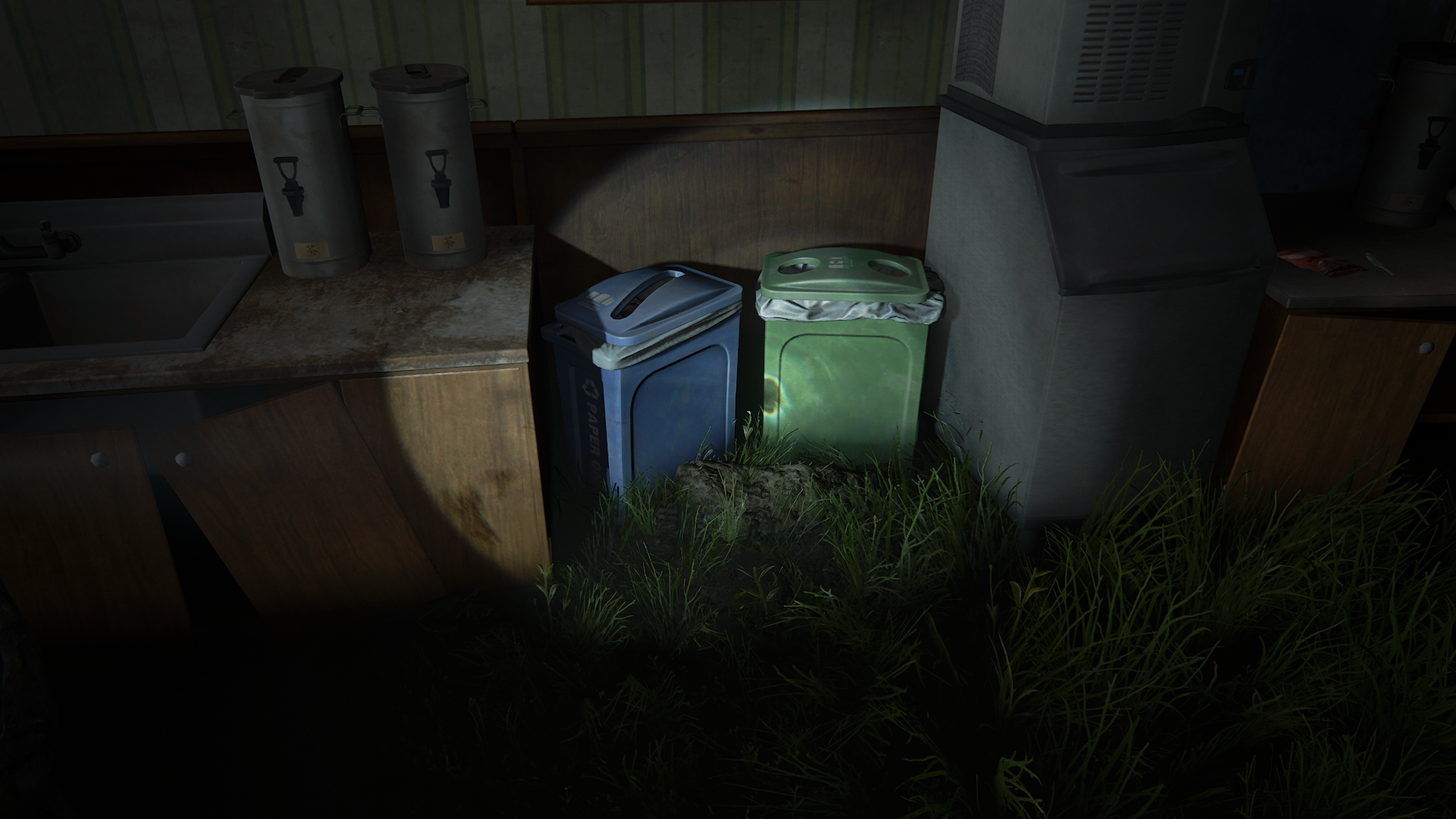
I took these screenshots because the bins feel almost too ordinary for a post-apocalyptic game. There is no set piece here, no collectible glowing in the dark. There is just a blue paper bin beside a green container, both carrying the memory of a system that once depended on people showing up every week.
That small detail is a kind of environmental storytelling. The colors imply sorting. The liners imply a repeatable service. The placement beside a kitchen tells us that someone used to care about what went where. When the people and routes are gone, the infrastructure remains as a fossil of everyday coordination.
Waste is a service, not a scenery problem
My experience in waste management has changed the way I read scenes like this. Waste is often treated as an object that simply goes away. In practice, it is a coordinated chain: containers have to be accessible, loads have to be separated safely, routes have to be staffed, and materials have to reach the right next step. A bin is the most visible part of that chain, but it only works because a lot of invisible work meets it at the curb.
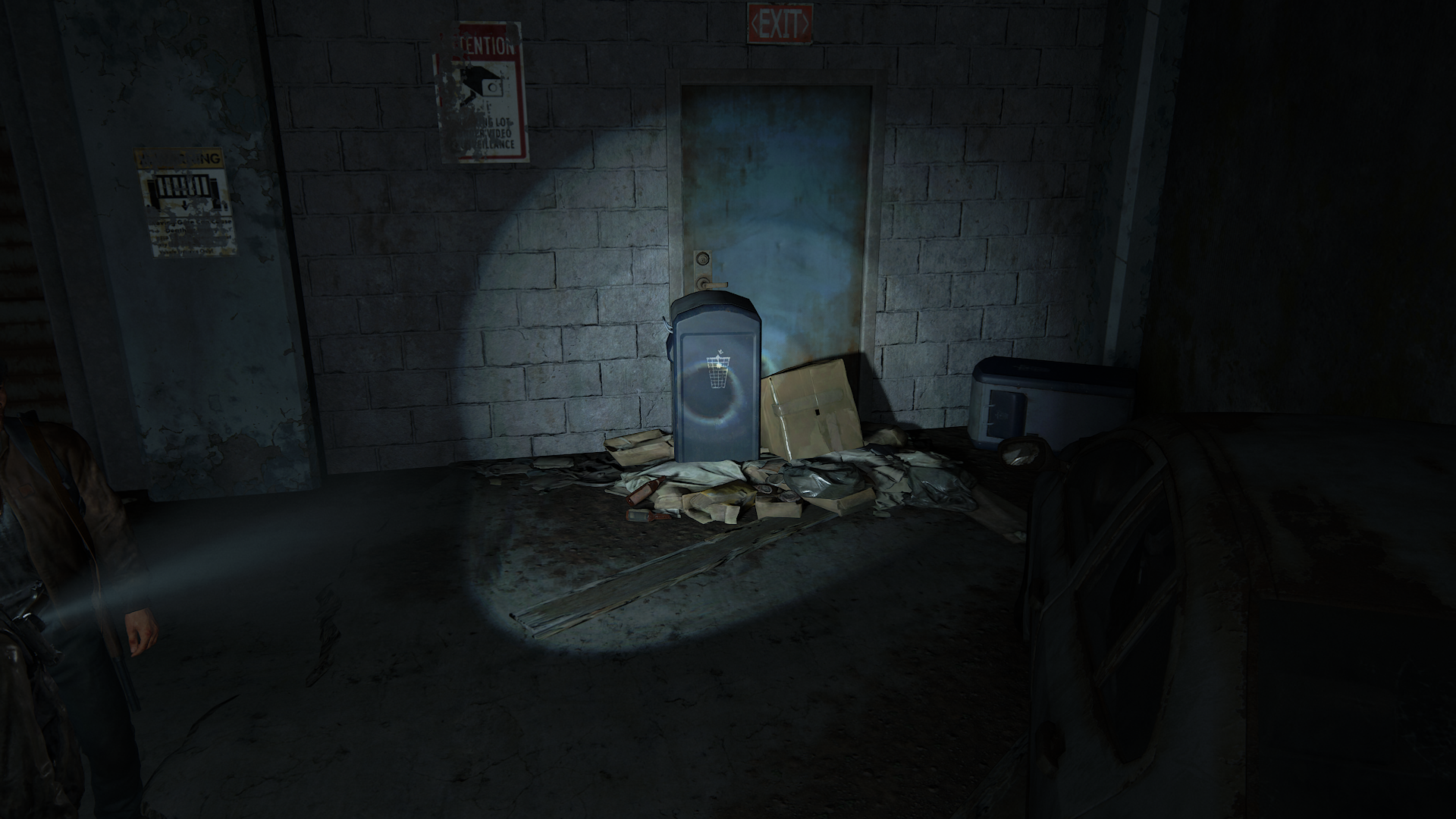
The game makes that invisible work visible by removing it. A black wheeled bin sits beside flattened cartons and a locked service door. The container is still recognizable, but its purpose has narrowed: it is now evidence of the last normal day, not a reliable handoff to a collection crew.
When water changes the question
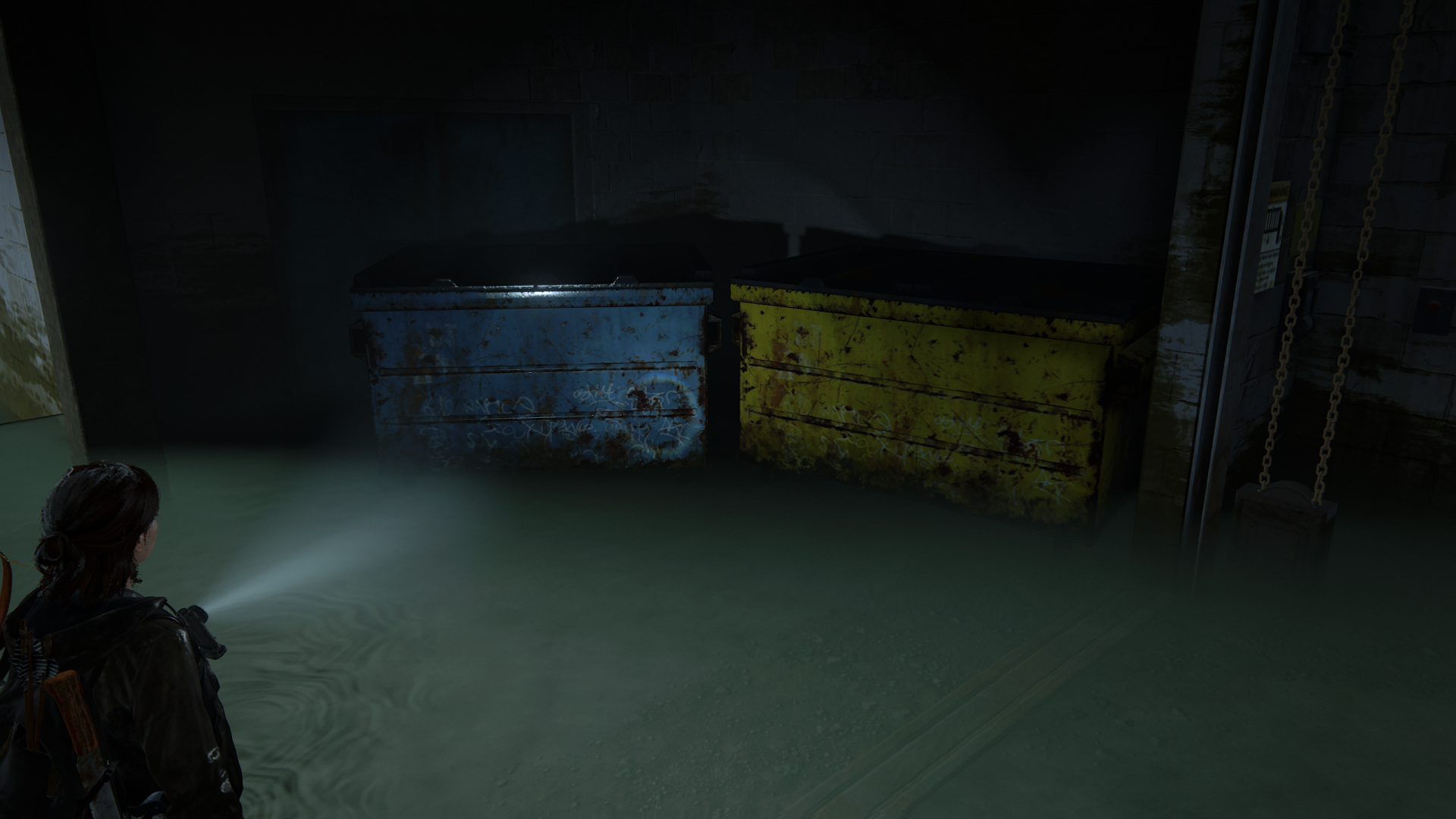
The flooded dumpster scene is even more direct. Once containers sit in standing water, disposal becomes a public-health and recovery problem. Materials are harder to identify, access is unsafe, and contamination can move beyond the original container. The image is fictional, but the logic is familiar: a disruption does not erase waste. It changes who is exposed to it and what it takes to manage it responsibly.
That is why these screenshots stay with me. They connect the scale of a fictional collapse to the practical lessons of waste work: prevention matters, separation matters, and dependable systems matter most when conditions are difficult. The humble bin is a reminder that livable communities are built from maintenance as much as from invention.
In The Last of Us Part II, the bins are background objects. For me, they are a prompt to look closer at the systems that make a place feel cared for - and to remember that sustainability is not only about what we build, but also about how consistently we handle what we leave behind.