
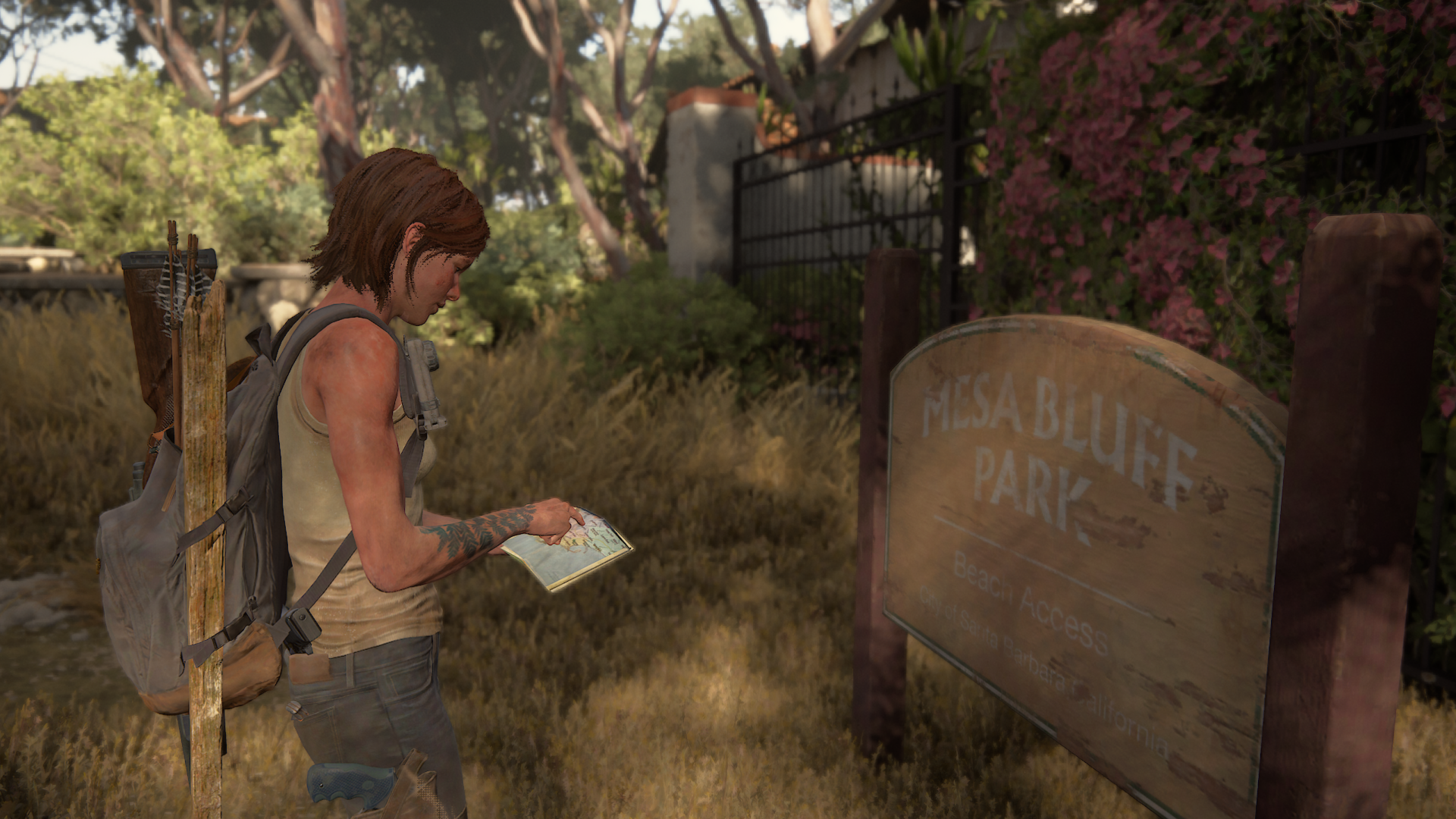
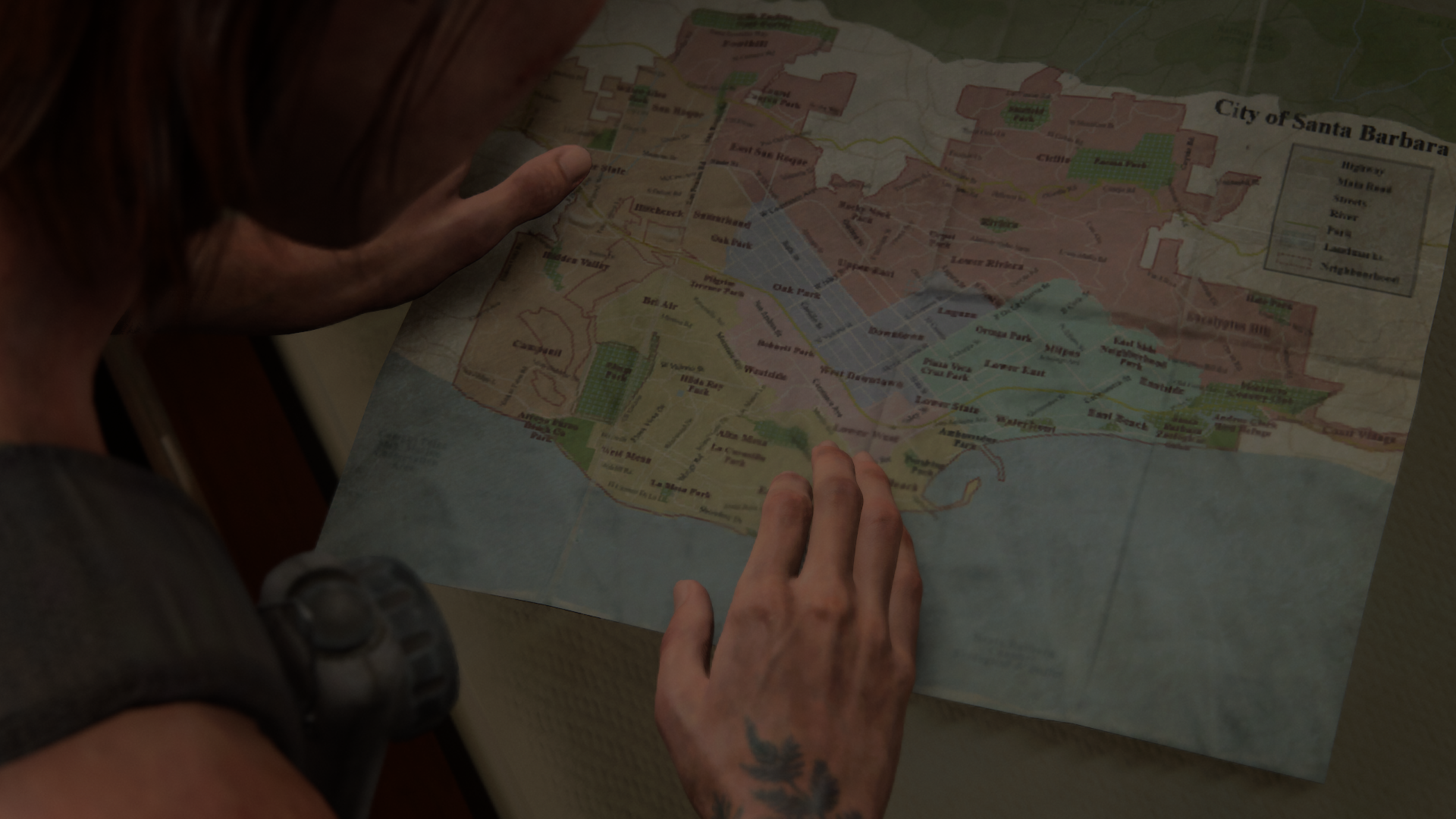
Santa Barbara enters the game as a name on a page before it becomes a place on screen. I like that order. A map makes the coast feel manageable: streets, parks, a destination, a line to follow. It is a promise that geography can be turned into a plan.
Then the route becomes physical. The Mesa Bluff Park sign is sun-faded, partly obscured, and still specific. It does not say simply “the beach”; it carries the old language of civic life: a named park, an access point, a place maintained for people who were expected to arrive. That specificity makes the abandonment feel sharper.
Maintenance disappears one surface at a time
The neighborhood screenshots are quiet. Palms and dry grass fill the sidewalks. Cars sit where they were left. Houses keep their colors, rooflines, and small signs of personality, but the edges of everything have softened. This is not nature replacing the city in one dramatic gesture. It is maintenance failing repeatedly until the built environment starts to read as part of the landscape.
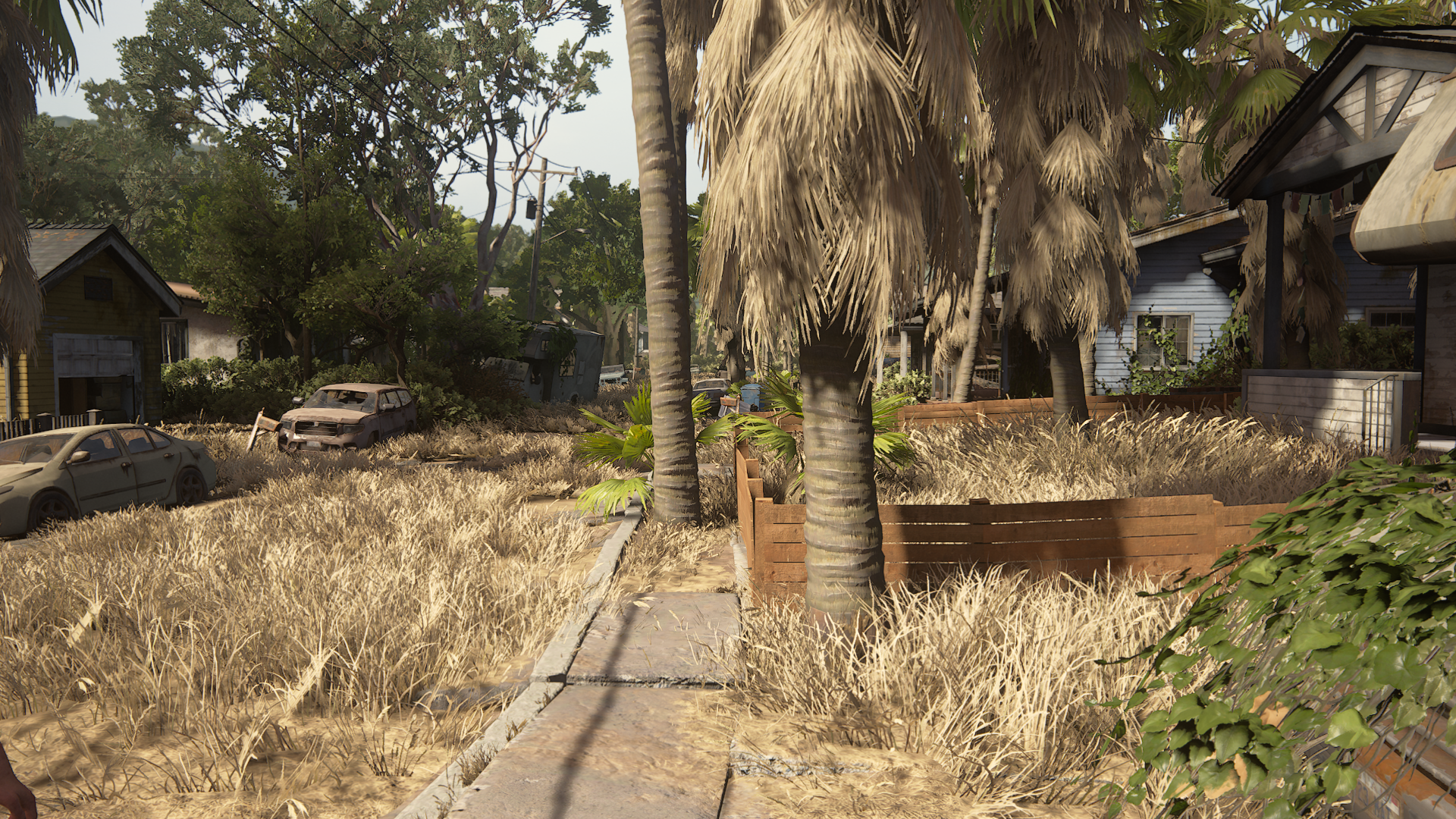
That is one of the details I notice because of my experience in waste management. A livable place is made of recurring, easy-to-miss services: collection, repair, watering, clearing, inspection. When those systems stop, the first evidence is not always a collapsed building. Sometimes it is a curb that disappears into weeds or a sign that keeps giving directions to people who never come.
The coast is both promise and proof
The shoreline finally opens the frame. A sailboat rests on the sand beneath the cliffs, beautiful enough to look like an invitation and stranded enough to read as a warning. The water is calm. The coast has not become ugly; it has become indifferent to the human story that brought someone there.
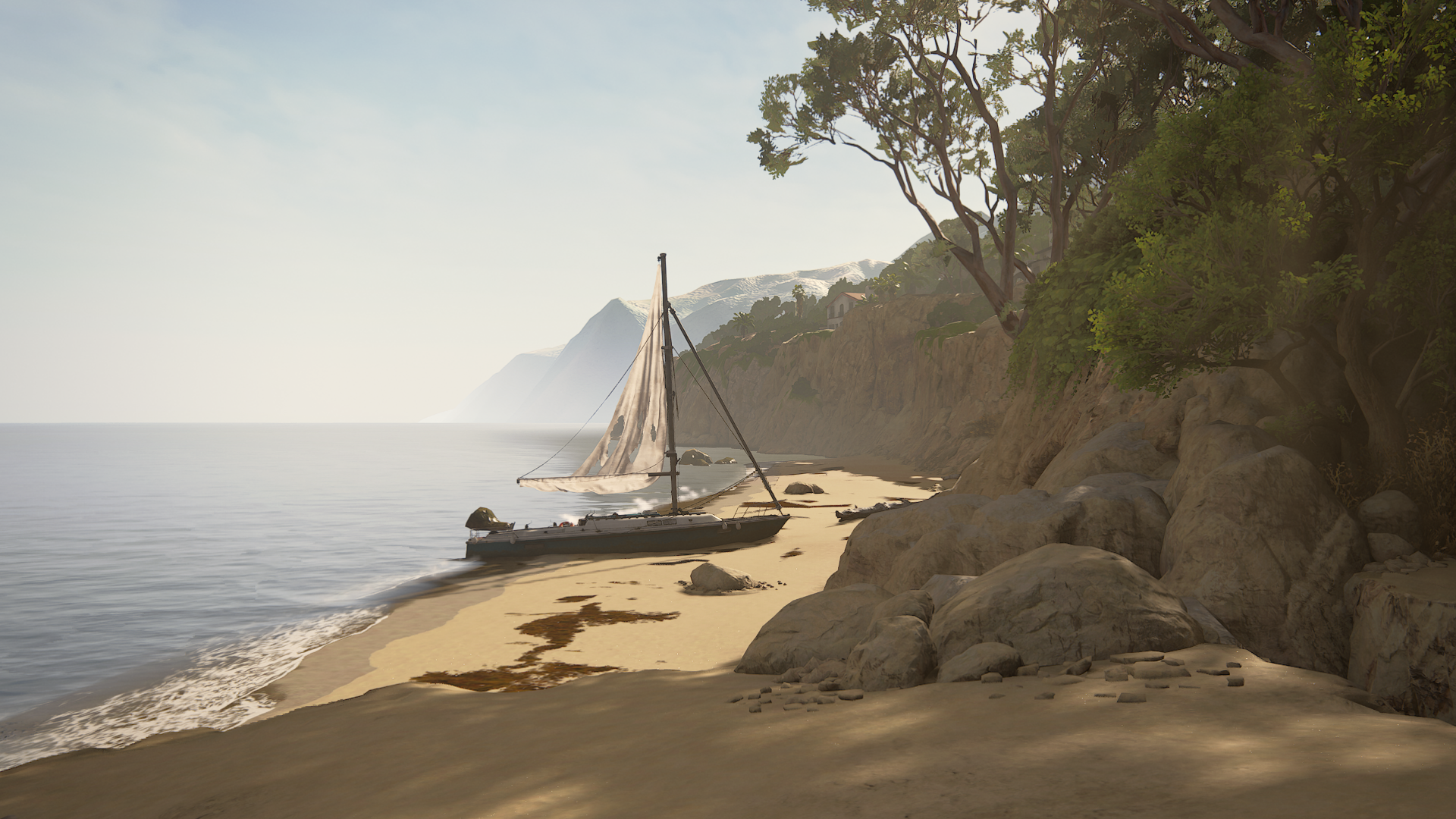
Santa Barbara works because it holds those contradictions in the same image: a destination and a dead end, a resort landscape and a field of abandoned routines, a place that is still recognizable even after its social contract has thinned out. The beauty does not soften the loss. It gives the loss somewhere to echo.
Like the trash bins I wrote about in my last post, these objects are background details with a long memory. A map, a park sign, a sidewalk, a boat: each one preserves a small piece of coordination. Together they ask a question I keep returning to when I think about sustainability: what has to be maintained for a place to remain a place, instead of becoming only a picture of what used to be there?